
Invisible Sun
In which immovable forces meet implacable fate...

Every story has an end as well as a beginning. This one starts with an everyday conversation before unseen forces disrupt that, and every other conversation human beings will have for the rest of their history… which has suddenly grown all too short, for time, like space, is constrained and circumscribed by… The Boundary.
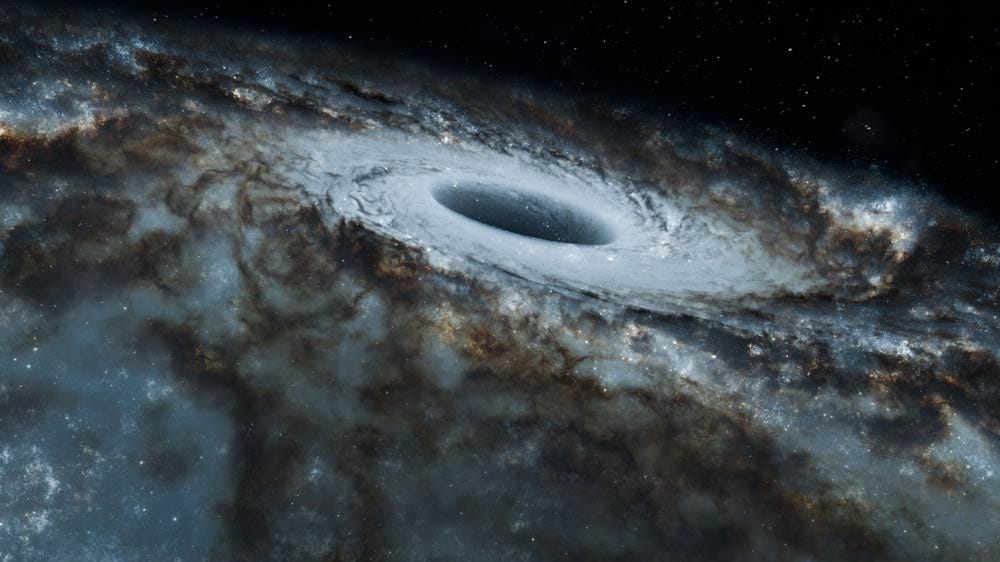
(Iceberg San/Pexels)
The conversation had been going well.
That was the thing Mission Controller Adaeze Nwosu kept coming back to in the weeks that followed — in the depositions and the committee hearings and the long, insomniac nights that became the texture of her life after that Tuesday.
The conversation had been going well. Commander Yevgenia Sorokina had been in good spirits, reporting nominal operations across all systems, describing the view from the observation port with the enthusiasm she always brought to descriptions of space, as though she were the first human being to have seen it and wanted to make sure the people on the ground understood what they were missing. The crew of the Meridian were 58 days out from Earth, 140 million kilometers into a 260-million-kilometer journey, and everything was optimal.
Adaeze had been smiling at something Sorokina said — something about Commander Park’s attempts to grow basil in the hydroponic unit, something warm and human and ordinary — when the image froze.
Not the connection. The image.
Sorokina’s face, mid-sentence, mid-laugh, suspended at the precise moment when laughter was most alive in a person’s expression. The audio cut with it. The telemetry readings, scrolling continuously across three of the secondary screens, simply stopped. Not zeroed out. Not lost. Stopped, mid-value, as though someone had pressed pause on the universe.
Adaeze said: “Yevgenia?”
The room said nothing back.
The diagnostic sequence took eleven minutes. Everything groundside was functioning. Every antenna, every receiver, every relay station in the deep space network was operating within normal parameters. The signal being sent from Mission Control was leaving Earth at the correct frequency and the correct power and being aimed at the correct coordinates. The problem was not on their end.
Dr. Marcus Webb from the communications team spent those eleven minutes with the expression of a man who was eliminating impossible explanations one by one and finding only the impossible ones remained. He kept running the diagnostic, and it kept returning the same result. “Our hardware is fine,” he said three times, as though repetition might eventually change the meaning of the words.
Flight Director Chen ordered the Space Telescope Array repositioned. This took forty minutes, during which the room maintained the controlled tension of professionals who had protocols for every scenario they could foresee and were beginning to suspect they were in a scenario they hadn’t imagined.
When the telescope feed came through, Adaeze looked at it for a long time without speaking.
The Meridian was there. Intact. No visible damage, no debris field, no indication of any catastrophic failure. It was simply — there. Hanging in the darkness at the precise coordinates its trajectory predicted, looking exactly as it should look… looking, in fact, as though nothing whatsoever had happened to it.
“It’s not moving,” said the young mission analyst at the station to Adaeze’s left. His name was Tomás, and he was twenty-six years old. He had been working at Mission Control for fourteen months and had never seen anything he couldn’t explain.
“Ships in space don’t appear to move,” Adaeze said. “The distances are — “
“No,” Tomás said. “I mean it’s not moving. I’m comparing against the reference frame from forty minutes ago when we repositioned. Meridian should have moved. At its current velocity, over forty minutes it should have moved by — “ He did the calculation, then hesitated and simply said it again: “Meridian hasn’t moved at all.”
The room absorbed this.
Dr. Priya Sharma, the mission physicist, had been standing at the back of the room since the freeze, which was unusual — her station was at the front, and she was generally not a person who stood at the back of rooms. She was looking at her tablet with an expression that Adaeze would later describe, in depositions, as the expression of someone whose understanding of a situation has just undergone a fundamental reorganization and who has not yet decided what to do with the new understanding.
“Priya,” Adaeze said.
Sharma looked up. Her eyes were distant, then focused on Adaeze for a moment before she was moving toward a console. “I need to check something,” she said. “Give me ten minutes.”
“What are you checking?”
“Ten minutes,” Sharma said again. She set her tablet in the console and then began to work on both the console and the tablet, shifting between the two rapidly. The room waited; something in her voice made asking again feel inadvisable.
It wasn’t ten minutes; It was fourteen. When Sharma looked up again, her expression had settled into something that Adaeze identified as the look of a person who has arrived at a destination they didn’t want to reach. “The lag time,” Sharma said. “Before the freeze. Walk me through the progression.”
Webb pulled up the communication logs. “Standard lag at mission day one, increasing normally with distance. Day 30, 168 seconds each way. Day 45, 245 seconds. Day 57 — “ He stopped.
“Day 57,” Sharma said.
“The lag jumped,” Webb said. He was reading it as though he hadn’t read it fifteen times in the past hour. “It jumped by — that can’t be right.”
“It’s right,” Sharma said. “What does it show?”
“It shows the lag increasing by a factor of…” Webb’s voice faded. He looked at her. “That’s not signal delay. Signal delay increases linearly with distance. This is — “
“Not signal delay,” Sharma cut in. “No. It’s not.” She set her tablet on the console and looked at the floor, her thoughts almost audibly clicking, going over everything.
“Then what…?” Flight Director Chen started.
Sharma sighed. “Time dilation,” she said.
“Time…?”
“Extreme time dilation. The kind you get in the proximity of a gravitational mass so large that spacetime in its vicinity is…” She stopped. “The only explanation for what happened is that Meridian hit the event horizon of a black hole.”
There were gasps of horror and exclamations of confusion and astonishment. Adaeze’s heart froze; she had already suspected this might be the case and had fervently hoped that Sharma would have something else to report. Now that she heard her theory confirmed, Adaeze felt a combination of fear and lightheaded unreality. Still, her scientist’s mind kept working the problem, even as Sharma gave voice to what she was thinking.
“You… you mean that Meridian fell inside of a black hole?” a telemetry tech asked.
“Not exactly,” Sharma told him… told the entire room. “The ship is not yet inside the black hole. It’s at the boundary.”
“But that means they can’t get away, can they?” the tech asked.
“It means,” Sharma said, her voice steady and deliberate, “that from the point of view of Meridian’s crew, they have already crossed the event horizon — the border between the black hole’s interior and the universe outside. No, they can’t escape. But at the same time, from our perspective, they are just… hanging there.”
Many people in the room understood this — they were space enthusiasts, after all — but the telemetry tech still seemed not to understand. He was probably in shock, Adaeze surmised.
“Time at the event horizon, observed from outside, approaches…” Sharma stopped again. “Look, it’s a matter of relativity.”
“They go faster than light once they cross the event horizon?” the tech asked, sounding dazed.
“Not that part of relativity. The part about gravity. How the intense gravity of a black hole affects the passage of time for anyone who might get too close. What we see is the image of the ship caught in the relativistic effects of the black hole’s gravity, just before it crosses the event horizon. But for the crew on the ship, it’s different. Local time for them is moving at a different speed. They’re not frozen. They’re moving. They’re breathing and talking and probably verifying what’s happened.”
“But to us, to any outside observer, they’re frozen,” Adaeze said. “And they will be for… forever?”
“From our frame of reference, the rate of time aboard the Meridian has effectively reached zero relative to our perception of time,” Sharma nodded. “Yes.”
The room was very quiet.
“How could it be a black hole?” Chen asked. “If there were a black hole in our solar system we’d know about it. Could it be some other gravitational source?”
“Like what?” Sharma asked. “Even Jupiter hasn’t got the kind of gravity that would warp time like this. And we know Jupiter hasn’t suddenly appeared between us and Mars. No, a black hole is the only possibility known to our understanding of physics.”
“But how is it here?” Chen asked.
“The same way ʻOumuamua entered our solar system in 2017,” Adaeze spoke up. “And 2I/Borisov two years later, and then, in 2025, 3I/ATLAS. Extrasolar objects transit through our system all the time… we only occasionally catch them in the act.”
“So, is this a primordial black hole? Or how is it just… flying through space?”
“We don’t know, and it doesn’t matter,” Adaeze said impatiently, her sense of irreality giving way to a sharper fear than she had felt before.
“There’s really no way we can rescue them?” the tech asked — stupidly, Adaeze thought with a frustrated lack of compassion.
“Meridian is lost,” Adaeze said. She knew she sounded cold and brusque, but there was literally no time to grieve the loss. “What we have to think about now is everyone else.”
“Uh… what?” Chen asked. Then her eyes went wide. “Oh, my god. You don’t mean… you don’t think…?”
Sharma picked up her tablet again. She turned it so Chen could see the screen, and then she turned it so Adaeze could see it. “We only have the positions of Meridian… or its image… to help us track the black hole at this moment, but with the help of orbital and radio telescopes we should be able to refine my initial calculations.”
“Wait,” the telemetry tech cried. “What are you talking about? That black hole… is it coming for us?”
Adaeze looked at him for what felt like a long moment but was probably only a split second… an emotional sort of time dilation, given the gravity of the situation. Then she looked at Sharma, who picked up on what she wanted with no prompting.
“The black hole is moving through our solar system on a trajectory that will bring it to its closest approach with Earth in approximately six weeks.”
The telemetry tech looked like he wanted to argue, but then he sat down in a sudden and heavy manner that almost looked like a faint.
“How close will that be?” Chen asked, her voice trembling.
Sharma sighed. “I can’t tell you just yet… but…” She closed her eyes and shook her head. “Whether it’s a hit or a near miss, given the immense gravitation we’re facing… close enough.”

“Can you tell us the exact condition of the Meridian’s crew?” Congressperson Trudi Schaff asked. It was Day Four of the emergency hearing on the Black Star Crisis, as the newsfeeds were calling it.
Some emergency, Adaeze seethed inwardly. The day Meridian had hit the event horizon a countdown had begun: Earth had only six weeks before colliding with the black hole. That was the hardest hard deadline she could imagine, and yet a week and a half had gone by before the nation’s elected lawmakers dragged themselves out of gridlock and convened the hearing. Another four days had elapsed since the hearing had commenced, and all the committee had done was ask variations of the same questions. Both Adaeze and Sharma had done their best to answer those questions and move the conversation along, but it felt like they’d hit an event horizon of their own — a bureaucratic one, a political one, where movement was impossible.
In objective reality, time marched on.
Talk about an unstoppable force meeting an immovable object like this goddamned congress, Adaeze thought bitterly. Idiots.
On the other hand, she reflected a moment later, maybe this is the smartest move. Keep talking as the shadow of planetary destruction and the erasure of all humanity, and all human history with it, approaches. Turn it into a spectacle of suspense and by the time the payoff gets here there’ll be no time for panic…
“Dr. Adaeze?” Rep. Schaff prompted.
Suppressing a sigh, Adaeze leaned toward the microphone on the table in front of her. “The crew of Meridian are inside the black hole’s gravitational gradient,” she said. “From their perspective, that is. From our perspective… thanks to relativistic effects and time dilation due to the black hole’s gravity… the ship is caught at the event horizon. Caught in a moment we will never see elapse.”
“So, they are still there? Alive? But beyond rescue?” Congresswoman Schiff pressed — not the first time she’d made this point. Adaeze wondered if she was trying to impress into the public record or the minds of the public that it wasn’t congress’ fault that a dozen astronauts from countries across the world were not going to be saved from the black hole.
“There is no possibility of rescue,” Adaeze told her. “Not for them, and not for us.”
The congresswoman frowned. “Let’s stick to the question, please. What are the crew on the ship seeing? Are they still alive? Are they suffering? Can they do anything to save themselves, even if we can’t mount a rescue mission?”
“Once they hit the event horizon, they were lost,” Adaeze said bluntly.
“May I?” Sharma said softly at her side. Adaeze nodded.
“Madame Chair, may I address your question?” Sharma asked. Schaff nodded. “They felt nothing unusual at the moment of crossing,” Sharma told her… told the world. “But at that moment, they entered a realm beyond ordinary spacetime. Any massive object possesses gravitational attraction — a planet, a star, a black hole. Gravity pulls matter toward the center of mass. That’s why stars and planets and moons are spherical in shape: All the mass of a planet or a sun wants to fall to its own center. Anything crashing to Earth, like a meteor, wants to fall to the planet’s center. The Earth’s surface stops that from happening. A black hole has no surface, but it does have an invisible boundary around it called event horizon. That’s the point of no return, the point at which nothing can travel fast enough to escape the black hole’s gravity — not even light, which is the fastest-moving thing in the universe.”
“And that’s why black holes are invisible,” Schaff said.
“Correct,” Sharma nodded.
“But don’t they typically have some sort of burning aura around them?”
“If they are swallowing enough matter, yes,” Sharma nodded. “A black hole’s gravity sucks matter down like a drain sucks down water. If there is a lot of matter near a black hole — gas, dust, plasma from a companion star — then that matter swirls around the black hole like water circling a drain before it vanishes across the event horizon. The black hole transiting our solar system has not got such an immense source of matter to swallow, so no such aura… or ring, technically… had formed around it. But to reiterate the point I was making, there’s no retrieving matter that crosses an event horizon. It falls to the center of the black hole.”
“And what is there?” Schaff asked.
“A singularity,” Sharma said. “Our mathematics describes it as a point of infinite density, though most physicists believe that word ‘infinite’ simply means our current understanding of physics breaks down at that point.”
Adaeze doubted Schaff understood a single syllable of her explanation.
“Whatever is actually there,” Sharma continued, “the gravitational force is beyond comprehension. The black hole contains the mass of perhaps ten of our suns, crushed to a point that occupies no measurable space. That mass hasn’t gone anywhere; its gravitational influence remains entirely in effect — which is precisely why we are having this conversation.”
“So, the Meridian will not fall into that singularity only to emerge in some other part of the universe?” Schaff asked.
Sharma didn’t hesitate. “No, ma’am. The ship and crew will be destroyed by the intense gravity and anything left will be incinerated by radiation before it reaches that pinpoint and effectively vanishes from reality as we know it.”
“Vanishes from our reality… but emerges into a different one?” Schaff asked.
“We have no reason to think that,” Sharma said. “Although, in a sense, a black hole is a universe of its own because no information can escape from it to the outside. Could a singularity open into a different reality? No one knows. It’s a theoretical possibility, but in my opinion it’s pure science fiction. Matter falling into a singularity is essentially annihilated. Even if it did emerge into some other realm, it would be nothing more than hard radiation: Matter converted entirely into energy. No one, and nothing, could survive.”
“And from the crew’s perspective how long would that collision with the singularity take?”
“We theorize it could be anywhere from a few hours to several days… according to their shipboard clocks, that is,” Sharma said. “When they look out a window… or a porthole… they’ll see a bright ring of light ahead of them, but — ”
“Like the light surrounding the black hole?” Schaff asked.
“No, ma’am, what they will see is all the starlight falling into the black hole with them. It will be gravitationally distorted and look like a bright blue ring in front of the ship. They won’t see anything behind them, though. No stars, not our sun, nothing. That’s true of all forms of light, including radio waves. Even if time dilation didn’t make it impossible, they couldn’t talk to us. They are completely cut off.”
“Alone,” Schaff said. “And doomed to inevitable death by being torn to shreds by intense gravity.”
Now Sharma did hesitate, not liking the congresswoman’s tone. “Yes, ma’am,” she said at last. “That’s correct, unfortunately.”
Schaff leaned forward with a malicious smile. “Do you think this country’s taxpayers should continue funding a space exploration program that is basically a death sentence to the brave souls that end up being flung into the maw of a destructive force like a black hole?”
Adaeze could no longer contain herself. “Excuse me, Madame Chair,” she said loudly, projecting her voice toward the mike. “You’re missing the point. No one ‘hurled’ Meridian anywhere. The ship was sent toward the position where Mars will be at the time of the ship’s anticipated arrival. The ship will never arrive there, tragically, because a black hole that has been traveling through space for uncounted aeons has entered our solar system and Meridian happened to cross paths with it. That is horrifying, yes, and it’s an outcome that could never have been predicted. But the fact that it did happen gives us time… a few weeks, just over a month at this point, to… to…”
Schaff was glaring now, her glee replaced with brittle anger. “To what, Dr. Adaeze? What does an immigrant scientist from a part of the world with inferior universities suggest we do now that we have lost an expensive spaceship and a dozen brilliant, courageous explorers who should never have been sent into space in the first place?”
“What I suggest, Madame, is that the people of Earth be given the respect due them,” Adaeze said, her voice firm but her force of will undiminished. “They need to hear the truth. Meridian is lost, and this entire planet will share its fate.”
Schaff scoffed.
“No, ma’am, I will be heard,” Adaeze said. “We’ve had a chance to refine our observations and calculations, and it’s become clear to us that the black hole — ”
“Collapsar Sharma,” Schaff said, now glaring at Adaeze’s colleague as if to accuse her personally. It was a name the right-wing press had taken to calling the approaching black hole.
“The black hole will swallow this planet just as it swallowed Meridian,” Adaeze said. “Instead of turning these last few weeks into a circus or looking to score political points, or whatever the hell it is that you’re doing, you might display some leadership and encourage the people of your country… the people of the Earth… to join together, find solace in one another, prepare themselves.”
“You want me to tell the people of this planet… the good Christian people of this planet… that God will abandon them? That He will not turn the threat aside?” Schaff shook her head, grinning again. “Pardon my plain manner of speech, but what else could we expect from a self-described atheist?”
Suddenly the chamber was in an uproar: Shouts of agreement, screams of terror, denunciations of Schaff and her words.
Adaeze felt Sharma tugging at her arm, heard her through the din saying they needed to leave.
Yes, Adaeze thought. Yes, we do. There’s nothing to be done — not here, not anywhere.
There was so much she and Sharma had not been able to explain; not because they didn’t want to, but because they had not been given the chance. Emails and text messages had besieged Adaeze for days: Threats, accusations, proposals romantic and crude, and many, many fearful questions, all asking the same things. What could they do? Where could they go? Might the black hole evaporate before it arrived? Why hadn’t astronomers seen the approach of the black hole sooner?
They were good questions. Safety? There would be none. The entire planet was due to fall into an impossibly destructive gravitational well from which it could never again crawl out… not in any form but radiation, anyway, and that wouldn’t even happen until the black hole’s eventual evaporation countless aeons from now. What she could and did say about that last question was more definite, though not much more consoling: Analyzing the black hole’s trajectory and speed, it was clear that the black hole had entered the solar system at an angle that allowed it to avoid detection except for some gravitational disturbances that, in retrospect, were now obvious but had been attributed at the time to other causes.
Funding cuts played into the failure to see it coming, too. Until now, the black hole’s gravitational lensing of background stars could only have been spotted using a state-of-the-art telescope, but the money for telescope time had all been used to track Meridian. It had been as much marketing as anything: Look! We’ve sent people to another planet! There they are, they are on their way! It had generated tremendous excitement around the world that a crewed mission to Mars was underway.
Now those telescopes might pick up the frozen image of Meridian perched on the event horizon, stuck in gravitational amber, but the naked eye was all anyone needed to see how the night sky had been transformed. A black circle — a complete blank — sat in the center of warped arcs of starlight, and a pale blue ring of starlight formed a halo around that dead circle of nothingness.
It got larger, more imposing, more eerily beautiful, and more terrifying night by night.
In another day or so the people of Earth would feel the tidal effects of the black hole’s gravity: Earthquakes, tsunamis, severe weather… eventually, with that ring of warped blue starlight looming overhead, the planet’s material would start to fall up, up into the sky. Rocks. Houses. Vehicles. People. Lightning would arc, aurorae would flare across the world’s skies in spectacular flares and plumes of colour, and the atmosphere would roar toward space in a storm not unlike the most gargantuan tornado ever to exist, the sky’s blue faltering and fading into the black of an airless sky. Life would cease to exist on Earth, save, perhaps, for refugees in deep mines. Even there, no safety would be found… not once the world simply fell out of the universe and into a cosmos of destruction.
Sharma had returned to her village in India for the same reason Adaeze had returned to her hometown of Owerri in southeastern Nigeria. She wanted to be with her family; she also wanted to find her way to one of the grand Hindu temples of New Delhi to applaud the gods, to seek serenity in their company.
Serenity. Adaeze hoped Sharma found it… hoped everyone found it, knew few truly would. She had. Once she let go of her anger at Schaff and the fake news sites that accused her and other scientists of somehow inventing the black hole or else fabricating a panic-inducing hoax, she’d found a place of stillness in herself, understanding that this was the way things were always meant to be. The black hole had been heading here since the beginning of time. Divinely planned or purely random, this was fate.
Adaeze stood in the warm Nigerian night, the air smelling of rain and red earth, her family’s voices behind her through the open door. She watched the southern sky, contemplated the wound in the skein of stars. The sight was celestially magnificent, especially now that the massive destruction of Earth’s million-plus ring of satellites had cut light pollution to almost zero. The Milky Way, visible from Owerri on a clear night, was curved wrong on one side, its stars pulled into impossible geometry.
It was the most beautiful thing she had ever seen.
She stood in the warm Nigerian night and looked at it the way she looked at the sky from Mission Control, trying to memorize it. The red earth under her feet. The smell of rain. Her family’s voices. The photon ring’s blue halo blazing around the approaching hole in the universe, more lightless than the night.
Adaeze watched, listened, nodded, and then went back inside.
Every story has an end as well as a beginning. For the people of Earth, that ending came not from their own insufficiency, as many had expected, nor from an vengeful god, but from the eternally scattering elements of an expanding cosmos… a cosmos contained by nothing invented or imagined by humankind, and only barely embraced by The Boundary.
Written by Savel and Kilian Melloy
Story by Kilian Melloy and Savel